Test Prep CFA® Level II Chartered Financial Analyst CFA® Level 2 Dumps in PDF

Free Test Prep CFA® Level 2 Real Questions (page: 2)

Ota L'Abbe, a supervisor at an investment research firm, has asked one of the junior analysts, Andreas Hally, to draft a research report dealing with various accounting issues. Excerpts from the request are as follows:

•“There's an exciting company that we're starting to follow these days. It's called Snowboards and Skateboards, Inc. They are a multinational company with operations and a head office based in the resort town of Whistler in western Canada. However, they also have a significant subsidiary located in the United States."
•"Look at the subsidiary and deal with some foreign currency issues including the specific differences between the temporal and all-current methods of translation, as well as the effect on financial ratios."
•"The attached file contains the September 30, 2008, financial statements of the U.S. subsidiary. Translate the financial statements into Canadian dollars in a manner consistent with U.S. GAAP."

The following are statements from the research report subsequently written by Hally:
Statement 1: Subsidiaries whose operations are well integrated with the parent will use the all-current method of translation.

Statement 2: Self-contained, independent subsidiaries whose operating, investing, and financing activities are primarily located in the local market will use the temporal method of translation.
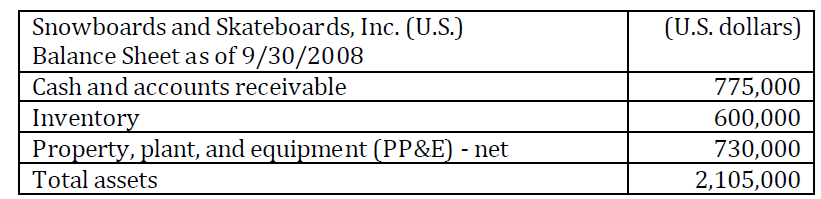
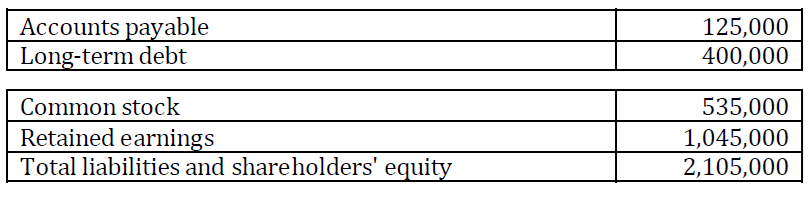
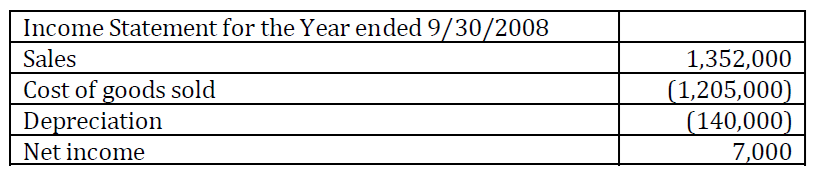


Other information to be considered
•Exchange rates (CAD/USD)
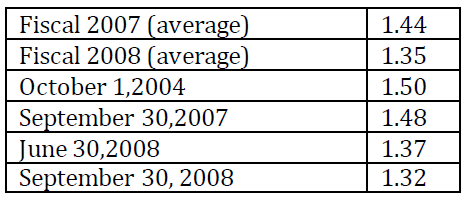

•Beginning inventory for fiscal 2008 had been purchased evenly throughout fiscal 2007. The company uses the FIFO inventory value method.
•Dividends of USD 25,000 were paid to the shareholders on June 30, 2008.
•All of the remaining inventory at the end of fiscal 2008 was purchased evenly throughout fiscal 2008.
•All of the PP&E was purchased, and all of the common equity was issued at the inception of the company on October 1, 2004. No new PP&E has been acquired, and no additional common stock has been issued since then. However, they plan to purchase new PP&E starting in fiscal 2009.
•The beginning retained earnings balance for fiscal 2008 was CAD 1,550,000.
•The accounts payable on the fiscal 2008 balance sheet were all incurred on June 30, 2008.
•The U.S. subsidiary's operations are highly integrated with the main operations in Canada.
•The remeasured inventory for 2008 using the temporal method is CAD 810,000.
•All monetary asset and liability balances are the same as they were at the end of the 2007 fiscal year, except that long-term debt was USD 467,700.
•Costs of goods sold under the temporal method in 2008 is CAD 1,667,250.

Suppose the parent uses the all-current method to translate the subsidiary for fiscal 2008. Will return on assets and net profit margin in U.S. dollars before translation be the same as, or different than, the translated Canadian dollar ratios?

Return on assets Net profit margin

  1. Same Same
  2. Different Different
  3. Different Same

Answer(s): C

Explanation:

Return on assets prior to translation will be different than the ratio after translation because the numerator (net income) is translated at the average rate, and the denominator (assets) is translated at the current rate using the all-current method.
Net profit margin will be the same because both the numerator (net income) and the denominator (sales) are translated at the average rate using the all-current method. (Study Session 6, LOS 23-d)


Bryan Stephenson is an equity analyst and is developing a research report on Iberia Corporation at the request of his supervisor. Iberia is a conglomerate entity with significant corporate holdings in various industries. Specifically, Stephenson is interested in the effects of Iberia's investments on its financial performance and has decided to focus on two investments: Midland Incorporated and Odessa Company.

Midland Incorporated
On December 31, 2007, Iberia purchased 5 million common shares of Midland Incorporated for €80 million. Midland has a total of 12.5 million common shares outstanding. The market value of Iberia's investment in Midland was €89 million at the end of 2008 and €85 million at the end of 2009. For the year ended 2008, Midland reported net income of €30 million and paid dividends of €10 million. For the year ended 2009, Midland reported a loss of €5 million and paid dividends of €4 million.

During 2010, Midland sold goods to Iberia and reported 20% gross profit from the sale. Iberia sold all of the goods to a third party in 2010.

Odessa Company
On January 2, 2009, Iberia purchased 1 million common shares of Odessa Company as a long-term investment. The purchase price was €20 per share and on December 31, 2009, the market price of Odessa was €17 per share. The decline in value was considered temporary. For the year ended 2009, Odessa reported net income of €750 million and paid a dividend of €3 per share. Iberia considers its investment in Odessa as an investment in financial assets.

In addition, Iberia has a number of foreign investments, so Stephenson's supervisor has asked him to draft a report on accounting methods and ratio analysis. The following are statements from Stephenson's research report.
Statement 1: Under U.S. GAAP, firms are required to use proportionate consolidation to account for joint ventures.
Statement 2: In general, if the parent's consolidated net income is positive, the equity method reports a higher net profit margin than the acquisition method.

Which of the following is the most appropriate classification of Iberia's investment in Odessa Corporation?

  1. Held-to-maturity.
  2. Held-for-trading.
  3. Available-for-sale.

Answer(s): C

Explanation:

Investments in financial assets are classified as held-to-maturity, hetd-fbr-trading, fair value, and availablc-for-sale. Held-to-maturity applies to debt securities only. Held-for-trading securities are debt or equity securities that are expected to be sold in the near term. Since the investment in Odessa is long-term, the securities are classified as available-for-sale. (Study Session 5, LOS 21.a)


Bryan Stephenson is an equity analyst and is developing a research report on Iberia Corporation at the request of his supervisor. Iberia is a conglomerate entity with significant corporate holdings in various industries. Specifically, Stephenson is interested in the effects of Iberia's investments on its financial performance and has decided to focus on two investments: Midland Incorporated and Odessa Company.

Midland Incorporated
On December 31, 2007, Iberia purchased 5 million common shares of Midland Incorporated for €80 million. Midland has a total of 12.5 million common shares outstanding. The market value of Iberia's investment in Midland was €89 million at the end of 2008 and €85 million at the end of 2009. For the year ended 2008, Midland reported net income of €30 million and paid dividends of €10 million. For the year ended 2009, Midland reported a loss of €5 million and paid dividends of €4 million.

During 2010, Midland sold goods to Iberia and reported 20% gross profit from the sale. Iberia sold all of the goods to a third party in 2010.

Odessa Company
On January 2, 2009, Iberia purchased 1 million common shares of Odessa Company as a long-term investment. The purchase price was €20 per share and on December 31, 2009, the market price of Odessa was €17 per share. The decline in value was considered temporary. For the year ended 2009, Odessa reported net income of €750 million and paid a dividend of €3 per share. Iberia considers its investment in Odessa as an investment in financial assets.

In addition, Iberia has a number of foreign investments, so Stephenson's supervisor has asked him to draft a report on accounting methods and ratio analysis. The following are statements from Stephenson's research report.

Statement 1: Under U.S. GAAP, firms are required to use proportionate consolidation to account for joint ventures.
Statement 2: In general, if the parent's consolidated net income is positive, the equity method reports a higher net profit margin than the acquisition method.

What amount should Iberia recognize in its 2009 income statement as a result of its investments in Midland and Odessa?

  1. €1 million profit.
  2. €2 million profit.
  3. €3 million loss..

Answer(s): A

Explanation:

Since Iberia owns 40% of Midland (5 million shares owned / 12.5 million total shares outstanding), the equity method is used. Under the equity method, Iberia reports its pro-rata share of Midland's net income (€5 million loss x 40% = €2 million loss). Changes in market value are ignored under the equity method.
Iberia's investment in Odessa is classified as available-for-sale since the investment is considered long-term. Dividend income from available-for-sale securities is recognized in the income statement (€3 dividend x 1 million shares = €3 million). The changes in market value are reported in shareholders' equity.
Investment income from Midland and Odessa is €1 million (€3 million dividend income from Odessa - €2 million pro-rata loss from Midland). (Study Session 5, LOS 21.a)


Bryan Stephenson is an equity analyst and is developing a research report on Iberia Corporation at the request of his supervisor. Iberia is a conglomerate entity with significant corporate holdings in various industries. Specifically, Stephenson is interested in the effects of Iberia's investments on its financial performance and has decided to focus on two investments: Midland Incorporated and Odessa Company.

Midland Incorporated
On December 31, 2007, Iberia purchased 5 million common shares of Midland Incorporated for €80 million. Midland has a total of 12.5 million common shares outstanding. The market value of Iberia's investment in Midland was €89 million at the end of 2008 and €85 million at the end of 2009. For the year ended 2008, Midland reported net income of €30 million and paid dividends of €10 million. For the year ended 2009, Midland reported a loss of €5 million and paid dividends of €4 million.

During 2010, Midland sold goods to Iberia and reported 20% gross profit from the sale. Iberia sold all of the goods to a third party in 2010.

Odessa Company
On January 2, 2009, Iberia purchased 1 million common shares of Odessa Company as a long-term investment. The purchase price was €20 per share and on December 31, 2009, the market price of Odessa was €17 per share. The decline in value was considered temporary. For the year ended 2009, Odessa reported net income of €750 million and paid a dividend of €3 per share. Iberia considers its investment in Odessa as an investment in financial assets.
In addition, Iberia has a number of foreign investments, so Stephenson's supervisor has asked him to draft a report on accounting methods and ratio analysis. The following are statements from Stephenson's research report.

Statement 1: Under U.S. GAAP, firms are required to use proportionate consolidation to account for joint ventures.
Statement 2: In general, if the parent's consolidated net income is positive, the equity method reports a higher net profit margin than the acquisition method.

What amount should Iberia report on its balance sheet at the end of 2009 as a result of its investments in Midland and Odessa?

  1. €84.4 million.
  2. €101.4 million.
  3. €102.0 million.

Answer(s): B

Explanation:

Under the equity method, the balance sheet carrying Value is increased by the pro- rata earnings of the investee and decreased by the dividends received from the investee. The balance sheet value at the end of 2008 is €88 million [€80 million + (€30 million Midland 2008 net income x 40%) - (€10 million dividend x 40%)]. The balance sheet value at the end of 2009 is €84.4 million (€88 million - (€5 million loss x 40%) - (€4 million dividend x 40%)].

Available-for-sale securities are reported on the balance sheet at fair value. Thus, the fair value of Odessa is €17 million (€17 x 1 million shares).

As a result of its investment in Midland and Odessa, Iberia will report investment assets of €101.4 million (€84.4 million book value of Midland + €17 million fair value Odessa). (Study Session 5, LOS 2 La)


Bryan Stephenson is an equity analyst and is developing a research report on Iberia Corporation at the request of his supervisor. Iberia is a conglomerate entity with significant corporate holdings in various industries. Specifically, Stephenson is interested in the effects of Iberia's investments on its financial performance and has decided to focus on two investments: Midland Incorporated and Odessa Company.

Midland Incorporated
On December 31, 2007, Iberia purchased 5 million common shares of Midland Incorporated for €80 million. Midland has a total of 12.5 million common shares outstanding. The market value of Iberia's investment in Midland was €89 million at the end of 2008 and €85 million at the end of 2009. For the year ended 2008, Midland reported net income of €30 million and paid dividends of €10 million. For the year ended 2009, Midland reported a loss of €5 million and paid dividends of €4 million.

During 2010, Midland sold goods to Iberia and reported 20% gross profit from the sale. Iberia sold all of the goods to a third party in 2010.

Odessa Company
On January 2, 2009, Iberia purchased 1 million common shares of Odessa Company as a long-term investment. The purchase price was €20 per share and on December 31, 2009, the market price of Odessa was €17 per share. The decline in value was considered temporary. For the year ended 2009, Odessa reported net income of €750 million and paid a dividend of €3 per share. Iberia considers its investment in Odessa as an investment in financial assets.

In addition, Iberia has a number of foreign investments, so Stephenson's supervisor has asked him to draft a report on accounting methods and ratio analysis. The following are statements from Stephenson's research report.

Statement 1: Under U.S. GAAP, firms are required to use proportionate consolidation to account for joint ventures.
Statement 2: In general, if the parent's consolidated net income is positive, the equity method reports a higher net profit margin than the acquisition method.

What adjustment, if any, must Iberia make to its 2010 income statement as a result of the intercompany transaction with Midland?

  1. Sales and cost of goods sold should be reduced by Iberia's pro-rata ownership interest in the intercompany sale.
  2. Midland's net income should be reduced by 20% of the gross profit from the intercompany sale.
  3. No adjustment is necessary.

Answer(s): C

Explanation:

Profit from intercompany transactions must be deferred until the profit is confirmed through use or sale to a third party. Since all of the goods purchased from Midland have been sold to third parties, all of the profit from the intercompany sale has been confirmed. Thus, no adjustment is needed. (Study Session 5, LOS 21.a)


Share your comments for Test Prep CFA® Level 2 exam with other users:

S
Shuv
10/3/2023 8:19:00 AM

good questions

R
Reb974
8/5/2023 1:44:00 AM

hello are these questions valid for ms-102

M
Mchal
7/20/2023 3:38:00 AM

some questions are wrongly answered but its good nonetheless

S
Sonbir
8/8/2023 1:04:00 PM

how to get system serial number using intune

M
Manju
10/19/2023 1:19:00 PM

is it really helpful to pass the exam

L
LeAnne Hair
8/24/2023 12:47:00 PM

#229 in incorrect - all the customers require an annual review

A
Abdul SK
9/28/2023 11:42:00 PM

kindy upload

A
Aderonke
10/23/2023 12:53:00 PM

fantastic assessment on psm 1

S
SAJI
7/20/2023 2:51:00 AM

56 question correct answer a,b

R
Raj Kumar
10/23/2023 8:52:00 PM

thank you for providing the q bank

P
piyush keshari
7/7/2023 9:46:00 PM

true quesstions

B
B.A.J
11/6/2023 7:01:00 AM

i can´t believe ms asks things like this, seems to be only marketing material.

G
Guss
5/23/2023 12:28:00 PM

hi, could you please add the last update of ns0-527

R
Rond65
8/22/2023 4:39:00 PM

question #3 refers to vnet4 and vnet5. however, there is no vnet5 listed in the case study (testlet 2).

C
Cheers
12/13/2023 9:55:00 AM

sometimes it may be good some times it may be

S
Sumita Bose
7/21/2023 1:01:00 AM

qs 4 answer seems wrong- please check

A
Amit
9/7/2023 12:53:00 AM

very detailed explanation !

F
FisherGirl
5/16/2022 10:36:00 PM

the interactive nature of the test engine application makes the preparation process less boring.

C
Chiranthaka
9/20/2023 11:15:00 AM

very useful.

S
SK
7/15/2023 3:51:00 AM

complete question dump should be made available for practice.

G
Gamerrr420
5/25/2022 9:38:00 PM

i just passed my first exam. i got 2 exam dumps as part of the 50% sale. my second exam is under work. once i write that exam i report my result. but so far i am confident.

K
Kudu hgeur
9/21/2023 5:58:00 PM

nice create dewey stefen

A
Anorag
9/6/2023 9:24:00 AM

i just wrote this exam and it is still valid. the questions are exactly the same but there are about 4 or 5 questions that are answered incorrectly. so watch out for those. best of luck with your exam.

N
Nathan
1/10/2023 3:54:00 PM

passed my exam today. this is a good start to 2023.

1
1
10/28/2023 7:32:00 AM

great sharing

A
Anand
1/20/2024 10:36:00 AM

very helpful

K
Kumar
6/23/2023 1:07:00 PM

thanks.. very helpful

U
User random
11/15/2023 3:01:00 AM

i registered for 1z0-1047-23 but dumps qre available for 1z0-1047-22. help me with this...

K
kk
1/17/2024 3:00:00 PM

very helpful

R
Raj
7/24/2023 10:20:00 AM

please upload oracle 1z0-1110-22 exam pdf

B
Blessious Phiri
8/13/2023 11:58:00 AM

becoming interesting on the logical part of the cdbs and pdbs

L
LOL what a joke
9/10/2023 9:09:00 AM

some of the answers are incorrect, i would be wary of using this until an admin goes back and reviews all the answers

M
Muhammad Rawish Siddiqui
12/9/2023 7:40:00 AM

question # 267: federated operating model is also correct.

M
Mayar
9/22/2023 4:58:00 AM

its helpful alot.

AI Tutor 👋 I’m here to help!